
Carroll County Court Records After Arrest
After a Carroll County jail arrest, the first public record often appears as a jail roster entry. That record shows current custody and booking facts. The court record begins when warrants are returned, charging documents are filed, accusations are prepared, indictments are sought, or case entries are made through the court. The Carroll County Clerk of Courts is the key custodian for court-file access.
The jail side and court side should not be mixed. Use Carroll County inmate records for current custody, booking number, bond field, and arresting agency. Use court records after a jail arrest for formal charges, docket entries, hearings, and dispositions. Booking photos belong with Carroll County jail mugshots, not the court case file.
The Clerk of Courts site is shown in this screenshot from the official clerk website.
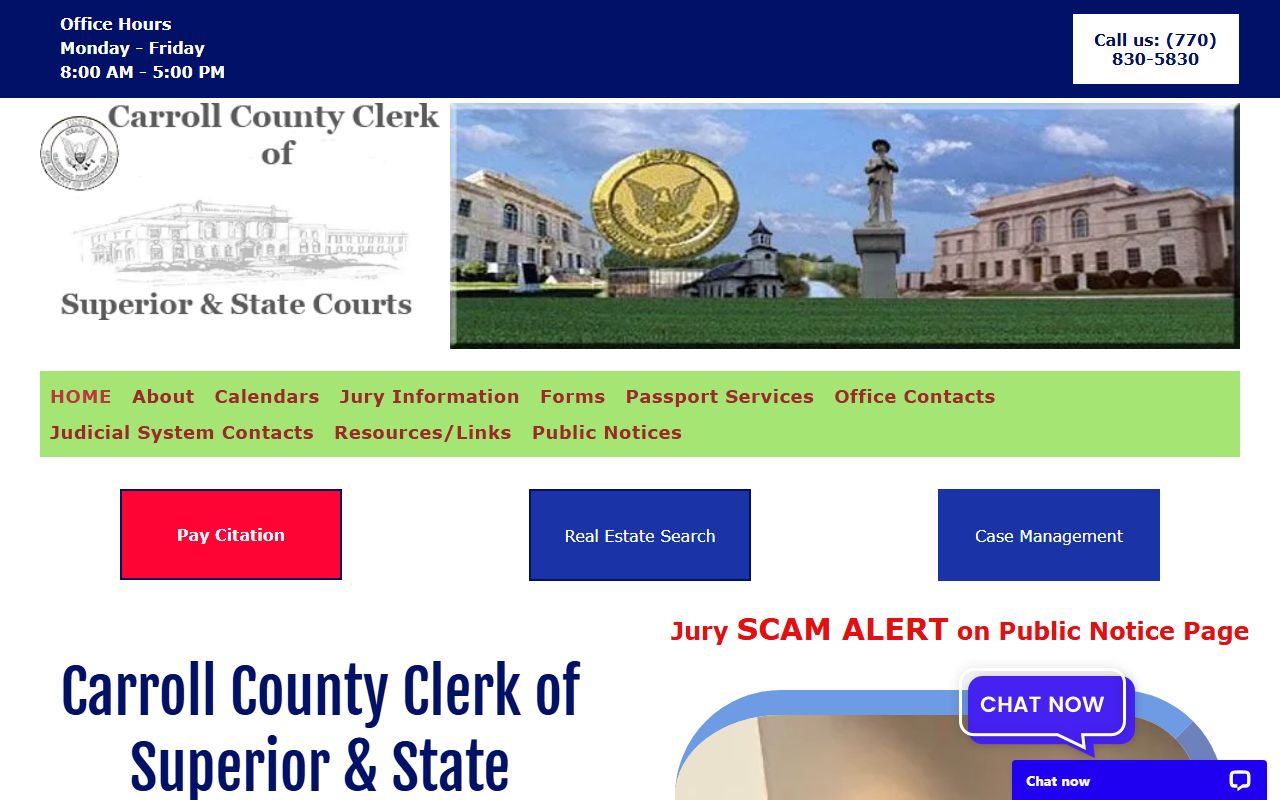
The clerk site is the local routing point for public case-management access, certified copies, older files, and records not found through a jail custody lookup.
Find Court Records After Arrest
The clerk-linked case-management portal is at carrollcountydocket.com/CourtsCMWS. During research, the portal displayed a login screen before public search fields were visible. That means the safest public instructions are to use the clerk access point, then rely on clerk guidance, in-person access, or copy requests when the portal does not expose the case search form.
- Check the jail roster first if the arrest was recent and custody status is unknown.
- Use the Carroll County Clerk of Courts site for case access and records routing.
- Open the clerk-linked case-management portal if credentials or public access are available.
- Search by defendant name or case number when the portal permits it.
- Review filed charges, docket entries, hearings, bond orders, and disposition fields.
- Request copies from the clerk when a record is older, certified, or not visible online.
The case portal login screen is visible in this screenshot from the Carroll County court case-management portal.
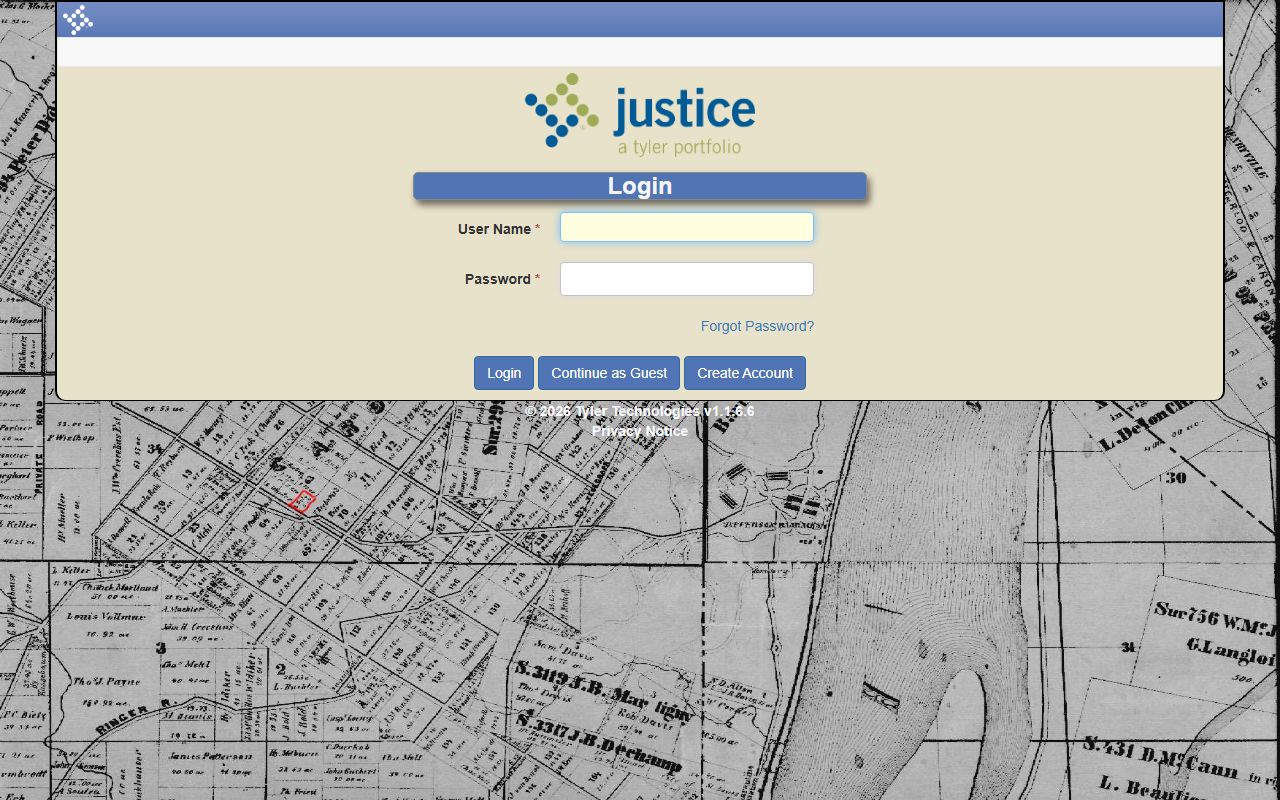
Because the portal required login at inspection, the full public search-field inventory could not be confirmed from the accessible screen.
| Field Label | Type | Required | Notes |
|---|---|---|---|
| Login / authentication | Login screen | Required before search fields visible | The portal did not expose name or case-number search fields during inspection. |
West Georgia Court Records
Current Carroll County court records after a jail arrest must use the West Georgia Judicial Circuit context. The county Superior Court page identifies Carroll County with the West Georgia Judicial Circuit. Georgia legislation created that circuit for Carroll and Heard counties effective January 1, 2025, and a Governor's release named Sarah Stimac Japour as District Attorney for the newly created circuit.
This detail prevents stale routing. Older Coweta Judicial Circuit material still appears online and may mention Carroll County from before the circuit change. For current court records after arrest, the newer county, legislative, and Governor sources should control. Prosecutor contact pages that still show old county lists should be treated with caution unless they match the West Georgia circuit change.
Charges Filed After Arrest
A jail arrest creates a booking record. A prosecutor then reviews the arrest and decides what formal charges to file. The court record may open through different documents depending on charge level and procedure. Felony matters may move by indictment or accusation where allowed. Other matters can follow a complaint or prosecutor filing path.
| Document | Filed By | What It Does |
|---|---|---|
| Complaint | Officer or prosecutor | States alleged facts or charge basis early in the case. |
| Information / accusation | Prosecutor | Formal prosecutor-filed charge document where procedure permits it. |
| Indictment | Grand jury | Formal felony accusation returned by a grand jury. |
The charge listed on the jail roster may not be the final court charge. Prosecutors can add, amend, reduce, dismiss, or decline counts after reviewing evidence, warrants, victim statements, lab reports, and prior case history.
Carroll County Charge Status
Charge status terms help separate a pending accusation from a final result. They also explain why court records after a jail arrest may not match the first roster entry. A booking charge can be broad or preliminary. The court file is where the formal case path is tracked.
| Status | Meaning |
|---|---|
| Pending | The charge or case is unresolved. |
| Amended | The charge or filing changed after the case opened. |
| Reduced | The charge changed to a lower offense. |
| Dismissed | The court or prosecutor ended that count or case. |
| Nolle prosequi | The prosecutor declined to proceed on the charge. |
| Disposition | The final result of a charge or case. |
Bond After Jail Arrest
Bond is tied to court authority. The Carroll County roster can show a bond field, but the reviewed official pages did not publish a detailed local bond schedule, accepted payment methods, bond-desk hours, or fee table. If bond is missing from a roster record, the person may be awaiting first appearance, bond review, warrant processing, or a judge's order.
| Bond Type | How It Works |
|---|---|
| Cash bond | Money is posted with the court or jail as security for appearance. |
| Surety bond | A licensed bonding company posts bond for a fee and assumes responsibility. |
| Property bond | Real property may secure release when accepted and approved. |
| PR bond | Release on promise and court conditions without full cash deposit. |
| No-bond hold | Ordinary bond does not permit release because a judge, warrant, sentence, or hold blocks it. |
Warrants and Court Records
The sheriff publishes a Most Wanted page, but it is not a complete active-warrant database. Bench warrants, arrest warrants, probation holds, parole holds, municipal warrants, and federal warrants can exist without appearing on that public list. If a warrant leads to a booking, the jail roster may show the person in custody, while the court record may show the warrant return or failure-to-appear entry.
Use the court clerk for court-originated warrant records, the sheriff for custody and warrant-routing questions, and the correct municipal, state, or federal channel when the warrant source is outside the county court file. Absence from a web list should not be treated as proof that no warrant exists.
Charges vs Convictions
An arrest and charge are not the same as a conviction. Court records after a jail arrest may show allegations, bond orders, hearings, and pending status before there is any final result. A conviction requires a guilty plea, verdict, or other adjudication.
| Point | Charge | Conviction |
|---|---|---|
| Stage | Accusation or filed count | Final guilty plea, verdict, or adjudication |
| Meaning | Alleged offense | Resolved finding or plea |
| Can change | Yes, it may be amended, reduced, or dismissed | Can be appealed or restricted only through legal process |
Restricted Court Records After Arrest
Georgia commonly uses record restriction language rather than a simple one-size-fits-all expungement rule. Under Georgia record-restriction procedures, eligible arrest records may be limited from public view after certain outcomes, but restriction is not automatic for every booking. Juvenile records, sealed court records, pending investigations, court orders, and protected personal information can also limit public access.
| Term | Public Effect | Research Note |
|---|---|---|
| Restricted | Limited from public criminal-history disclosure where eligible | Georgia procedure under O.C.G.A. 35-3-37. |
| Sealed | Hidden from ordinary public view by court rule or order | May still be accessible to limited officials. |
| Expunged | Often used casually for cleared records | Use Georgia-specific restriction language when discussing Georgia records. |
Open Records After Arrest
Georgia's Open Records Act, O.C.G.A. 50-18-70 et seq., is the broad access law for public records held by state and local agencies. O.C.G.A. 50-18-71 addresses response timing and lawful costs, while O.C.G.A. 50-18-72 lists exemptions that can affect law-enforcement and court-related records. Requests should go to the custodian that keeps the record.
For booking records, incident reports, and jail mugshots, the likely custodian is the Carroll County Sheriff's Office. For court filings, docket entries, certified copies, and dispositions, the custodian is the clerk or court. For state prison records, use GDC. For federal or immigration custody, use BOP, federal court sources, USMS routing, or ICE as appropriate.
Important: Court records after arrest should not be used for FCRA-covered screening unless obtained through a lawful consumer-reporting process.
Public Record Search
Sponsored Results